
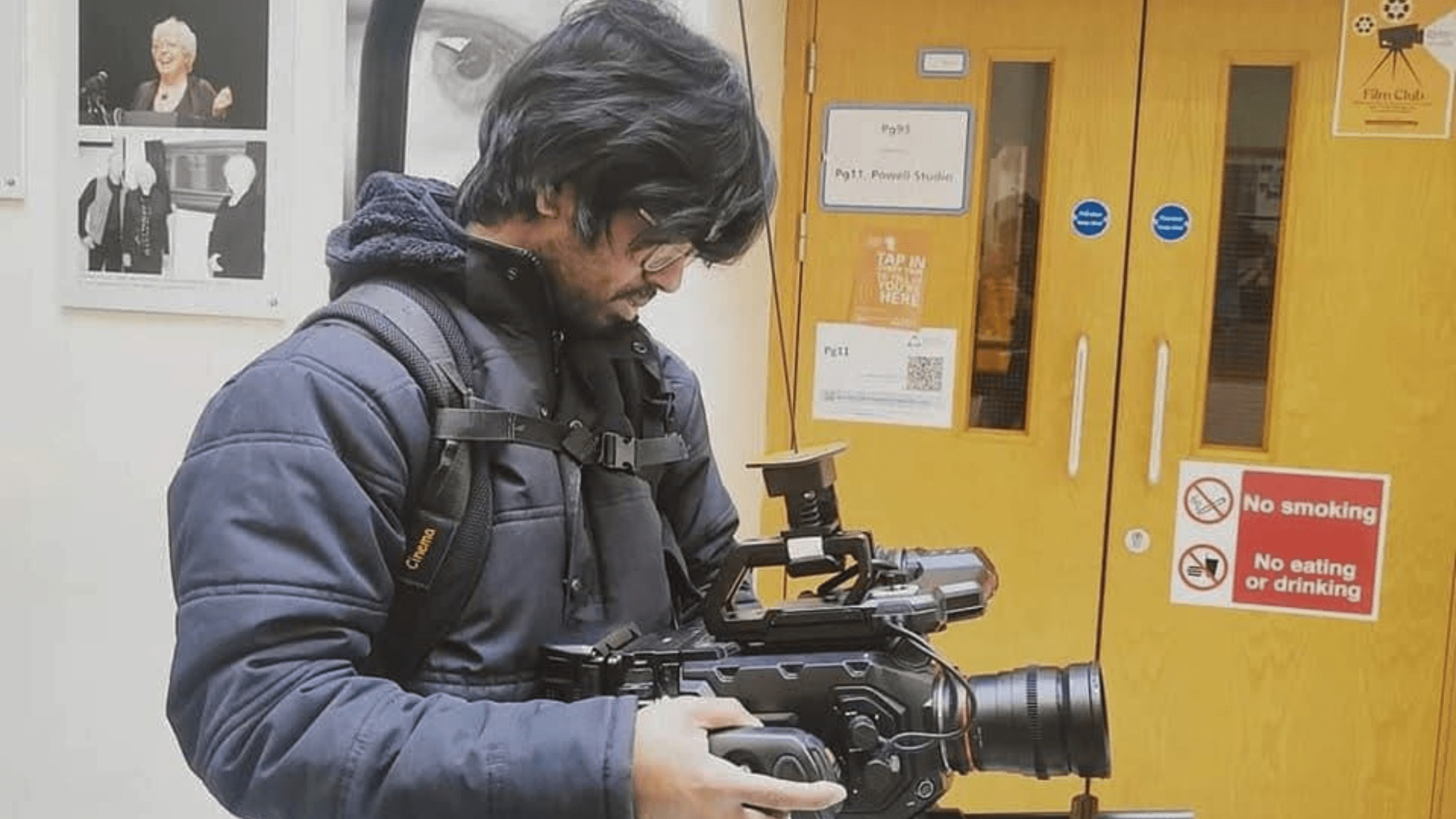
I started with zero-budget productions, so I am well-versed in the “one-man-army” approach. While a low budget limits resources, it forces me to be more creative with my visual metaphors and storytelling. However, regardless of the budget, I always prioritize the well-being of my crew; their dedication is what truly powers the film. Arman Ali
What inspired you to become an independent filmmaker, and how did your journey begin?
My journey began in 2014 when I initially wanted to be an actor. I spent days visiting modeling and talent agencies while I was an undergraduate student, but no one gave me a chance. Refusing to give up, I gathered my friends and formed our own small production group. We didn’t even have the budget to hire an editor, so I learned editing through online tutorials. When our first project was selected for an inter-university film festival in Bangladesh, I knew I had found my true calling behind the camera.
Can you elaborate on the concept of “emotional anthropology” and how it influences your projects?
To me, every human being carries a unique archive of sorrow. “Emotional anthropology” is the study of these diverse layers of grief—how some pains evolve with time while others remain as lifelong companions. My work is an attempt to collect and document these shifting emotional landscapes, treating human sadness as a vital part of our shared history.
In your opinion, what role do the quiet moments play in storytelling?
Quiet moments are the heart of “Shades of Sadness.” In a world full of noise, silence allows the audience to confront the “weight” of the emotion on screen. These pauses bridge the gap between the subject’s memory and the viewer’s empathy, making the storytelling feel less like a movie and more like a shared meditation.
How do you choose the stories you want to tell, and what criteria do you use for selecting subjects?
My choice of stories is deeply automatic and often mirrors my own mood or headspace. When a theme resonates with my current state of mind, it evolves into a project.
Your latest project, Shades of Sadness, explores vulnerability across cultures. What specific stories or themes have resonated most with you during this process?
The theme of “shared resilience” resonated most. Whether it was a subject in Turkey facing cultural displacement or someone in London dealing with personal loss, the underlying vulnerability was the same. The realization that grief has no borders and that our “shades of sadness” are universal is what stayed with me throughout this process.
How does working in a low-budget environment impact your creative choices and storytelling techniques?
I started with zero-budget productions, so I am well-versed in the “one-man-army” approach. While a low budget limits resources, it forces me to be more creative with my visual metaphors and storytelling. However, regardless of the budget, I always prioritize the well-being of my crew; their dedication is what truly powers the film.

Can you describe your process of blending documentary realism with a poetic visual touch?
This blend comes from a very personal place. I started exploring other people’s sadness as a way to lighten the burden of my own. By weaving these raw, real-life interviews with poetic, atmospheric visuals, I aim to transform “realism” into something more rhythmic and evocative—turning a documentary into a visual poem.
What challenges do you face when capturing raw, unpolished truths, and how do you overcome them?
The biggest challenge is that no one wants to share their deepest pain with a stranger. To overcome this, I became very public with my mission. I distributed leaflets on the streets of London and ran crowdfunding campaigns for “Sorrow.” By showing my own vulnerability first, I opened a door for others to walk through with their truths.
How do you ensure that the “real voice” behind the story is preserved in your films?
I received many stories that were similar in theme, like the loss of a parent or spouse. To preserve the “real voice,” I looked for the specific, unique details that made a story feel lived-in. I pushed my subjects to tell the “real incident,” not just the general feeling. For those who were too shy to appear on camera, I offered them the freedom to share through audio or writing, ensuring their anonymity didn’t silence their truth.
Your documentary Shades of Sadness was a semifinalist at the Sweden Film Awards. How did that recognition impact your perspective on the film and your work as a whole?
I am incredibly grateful to the Sweden Film Awards for this recognition. Being a semi-finalist has given our team a significant boost in confidence. It validates the hard work we put into this experimental project and pushes us to dream bigger for our future productions under “Film Suitcase.”
What do you hope audiences take away from Shades of Sadness?
I want the audience to find a reflection of their own grief in the film. I hope that they realize they are not alone in their “shades of sadness” and that there is a strange, beautiful comfort in knowing that others are carrying similar burdens.
How has your understanding of memory and identity evolved through your work as a filmmaker?
I’ve realized that our identity is not just what we achieve, but also what we survive. Memory is the thread that holds these experiences together. Through filmmaking, I’ve learned that by documenting these memories, we aren’t just looking at the past—we are defining who we are in the present.
Can you share a particularly impactful moment or story from your filmmaking journey that changed your perspective?
The most impactful moment was realizing that I didn’t need anyone’s “permission” to be a filmmaker. My journey was fueled by the anger of being rejected by agencies. That fire taught me that if no one gives you a chance, you have to create your own. That shift from “waiting” to “creating” changed my life.
How do you approach editing in a way that complements your vision as a director?
To me, editing is like playing with a craft; it’s where the final story is truly born. Since I know how to edit, I have the creative freedom to experiment with linear and non-linear structures. It allows me to reshape the narrative until it perfectly aligns with my directorial vision.
What advice would you give to aspiring filmmakers who want to tell authentic and meaningful stories?
Filmmaking is both hard and easy, depending on your perspective. If you think it’s easy, it becomes easy—just look around you, find a story in your immediate surroundings, and start. Don’t wait for the perfect gear or a big budget; the authenticity of your story is what matters most.